Huberman Lab
How Women Can Improve Their Fertility & Hormone Health | Dr. Natalie Crawford
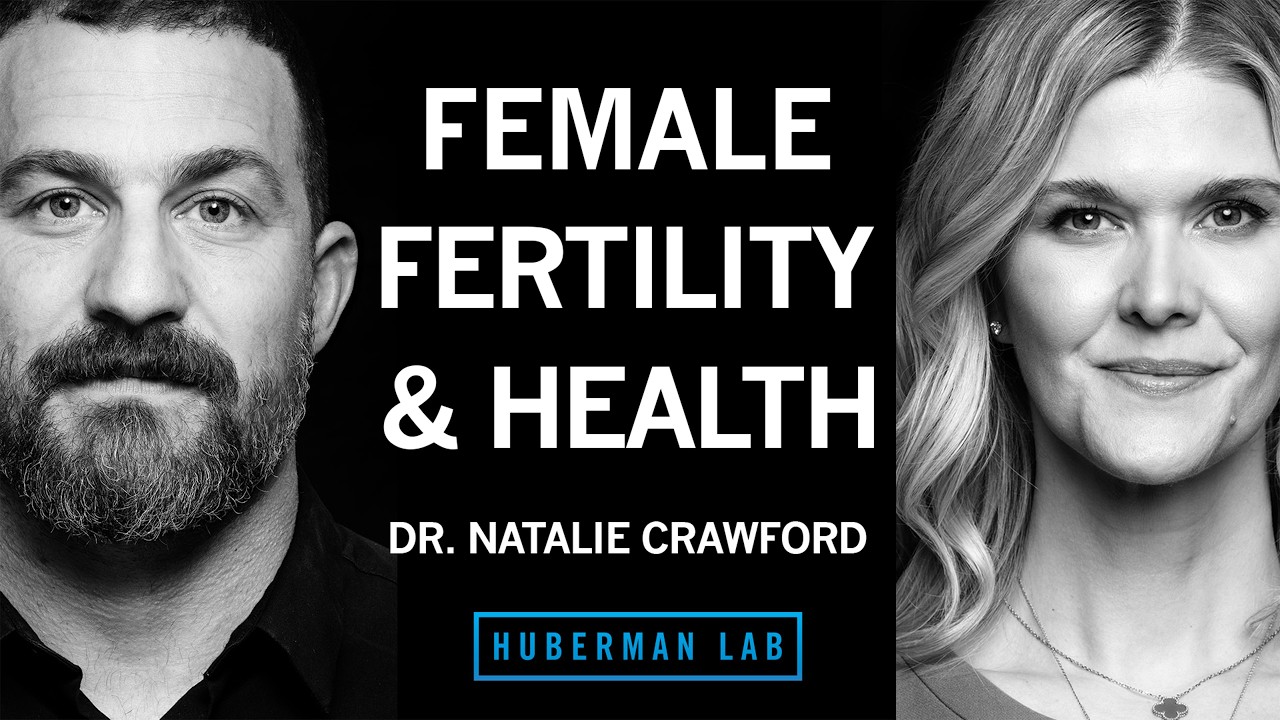
Episode Summary
AI-generated · Apr 2026AI-generated summary — may contain inaccuracies. Not a substitute for the full episode or professional advice.
Dr. Natalie Crawford, a double board-certified physician specializing in obstetrics, gynecology, fertility, and reproductive health, joins Andrew Huberman to discuss actionable steps women can take to enhance their reproductive and hormone health. The central thesis is that fertility and hormonal balance are not just about successful pregnancy but are strong correlates of overall health and longevity, offering a crucial lens through which to view one's general well-being. Dr. Crawford introduces her new book, "The Fertility Formula: Take Control of Your Reproductive Future," which expands on these themes, emphasizing how understanding one's fertility can empower informed health decisions.
The episode delves into specific insights, such as fertility serving as a vital health marker; infertility is correlated with increased rates of metabolic syndrome, cancer, heart attack, stroke, and early death [04:06]. A key, counterintuitive recommendation is for all women desiring children to get an AMH (anti-Müllerian hormone) test, which measures ovarian reserve (egg count) and costs around $79 out-of-pocket, despite current medical guidelines often limiting its use to diagnosed infertility [46:58, 55:07]. The discussion differentiates between egg quality (genetic normalcy and competency, influenced by age and metabolic health) and ovarian reserve, noting that egg freezing does not deplete one's finite egg supply but rather matures eggs that would otherwise naturally die off that month [44:55, 61:13]. The concept of hormone augmentation, rather than strict replacement, is introduced, advocating for optimizing hormone levels within a normal range to alleviate symptoms and offer long-term protective benefits [09:15, 10:16].
Dr. Crawford debunks common myths, explaining that certain forms of hormonal birth control, while temporarily masking underlying issues like PCOS, do not cause infertility themselves, but women should stop them months before trying to conceive to understand their natural cycle [81:36]. She highlights the importance of tracking ovulation beyond just period dates, as early ovulation disorders can manifest as a short luteal phase while still maintaining regular cycles [53:05]. The detrimental impact of chronic inflammation, insulin resistance, and environmental toxins (like microplastics accumulating in the ovary) on egg quality and ovarian lifespan is also explored, emphasizing a lifestyle-based approach to mitigate these factors [18:26, 20:29]. Notably, NSAIDs (e.g., Advil, ibuprofen) taken around ovulation can prevent egg release and should be avoided during the fertile window [90:44].
Listeners will walk away with a robust framework for proactive reproductive and hormone health management. The episode empowers women with specific knowledge and tools—from accessible testing like AMH to nuanced lifestyle adjustments and a re-evaluation of medical guidelines—to take control of their health narrative and make informed decisions about their fertility and longevity.
👤 Who Should Listen
- Women contemplating future pregnancy or family planning, regardless of age.
- Individuals interested in proactive hormone and reproductive health management.
- Anyone experiencing irregular menstrual cycles, painful periods, or unexplained fertility challenges.
- Couples navigating infertility or considering advanced reproductive technologies like IVF or egg freezing.
- Women in perimenopause or post-menopause seeking to understand the long-term impact of hormonal changes on health and options for hormone augmentation.
- Healthcare professionals interested in evolving, patient-centric approaches to fertility testing and care.
🔑 Key Takeaways
- 1.Fertility serves as a critical health marker for women, with infertility correlating with higher risks of metabolic syndrome, cancer, heart attack, stroke, and earlier mortality [04:06].
- 2.An AMH (anti-Müllerian hormone) test, costing around $79, is crucial for women to assess their ovarian reserve (egg count) and understand their reproductive timeline, even if medical guidelines currently limit its recommendation to those with diagnosed infertility [46:58, 55:07].
- 3.Hormone augmentation therapy, rather than just strict hormone replacement, allows women to optimize hormone levels within a healthy range, potentially starting in perimenopause, offering protective benefits for cardiovascular, bone, and brain health [09:15, 10:16].
- 4.Egg freezing or IVF cycles do not deplete a woman's overall ovarian reserve; they merely leverage the monthly cohort of eggs that would naturally die off to mature more of them for retrieval [61:13, 62:14].
- 5.Tracking ovulation (e.g., luteal phase length), not just menstrual periods, provides a more sensitive and earlier indicator of hormonal health and potential ovulation disorders [53:05].
- 6.Prior pregnancy loss or termination does not negatively impact future fertility, though any intrauterine procedure carries a slight risk of scar tissue if associated with heavy bleeding or infection [86:40, 87:42].
- 7.Certain lifestyle factors like chronic inflammation, insulin resistance, and exposure to endocrine-disrupting chemicals (e.g., in plastics) can negatively impact egg quality and ovarian lifespan [18:26, 20:29].
- 8.NSAIDs (like Advil or ibuprofen) taken around ovulation can prevent the egg from being released, making them problematic for those trying to conceive during the fertile window [90:44].
💡 Key Concepts Explained
AMH (Anti-Müllerian Hormone) Test
A simple blood test that estimates a woman's ovarian reserve, indicating the number of eggs remaining in the ovary. Dr. Crawford emphasizes its importance for understanding reproductive timelines, identifying potential underlying conditions (like autoimmune disease or endometriosis contributing to low AMH), and empowering women to make informed decisions about family planning or fertility preservation, regardless of whether they currently have diagnosed infertility [46:58, 52:04].
Egg Quality vs. Ovarian Reserve
Ovarian reserve refers to the *quantity* or number of eggs a woman has remaining, which can be approximated by an AMH test. Egg quality, on the other hand, describes the *competency* of those eggs, encompassing their genetic normalcy, mitochondrial health, and proper chromosome arrangement, which is primarily influenced by chronological age and metabolic health [44:55, 46:58]. Understanding this distinction is crucial because while AMH reveals egg count, age is the primary predictor of egg quality.
Fertility as a General Health Marker
This framework posits that a woman's fertility status is a direct readout of her overall hormonal, cellular, and metabolic health, extending beyond merely the ability to conceive. Dr. Crawford highlights that infertility often serves as an early warning sign for underlying issues like chronic inflammation or insulin resistance, which can increase risks for metabolic syndrome, cancer, heart attack, stroke, and early mortality [03:04, 04:06].
Hormone Augmentation Therapy
A proactive approach to hormone management that aims to optimize hormone levels within a healthy, normal range, rather than waiting until they fall strictly below a defined threshold (replacement). This method, applicable to both men and women, allows for addressing symptoms and achieving optimal well-being, potentially starting in perimenopause for women, and offers long-term protective benefits for various aspects of health [09:15, 10:16].
⚡ Actionable Takeaways
- →Ask your doctor for an AMH (anti-Müllerian hormone) test to understand your ovarian reserve, and if denied, consider ordering it yourself through platforms like LabCorp Request or Function Health for about $79 [52:04, 55:07].
- →Learn to track your ovulation precisely to monitor your hormonal health, paying attention to the length of your follicular and luteal phases, as a regular period alone may mask early ovulation disorders [53:05, 54:05].
- →Consider removing a progesterone IUD at least six months before intending to conceive to allow the endometrial lining time to rebuild for optimal receptivity [85:40].
- →Avoid NSAIDs (e.g., Advil, ibuprofen) during your fertile window if trying to conceive, as they can prevent egg release; limit their use to menstrual days [90:44].
- →Cultivate a lifestyle that actively reduces chronic inflammation, focusing on "five non-negotiables": sleep, stress management, muscle building, anti-inflammatory food, and toxin avoidance [91:45].
- →Stop hormonal birth control (pills) three to six months before trying to conceive to learn your natural ovulation pattern and identify any underlying issues the pill might have masked [84:39].
- →Get a semen analysis early in the conception process, as male factor infertility (e.g., no sperm despite ejaculate) is a common, often undiagnosed issue; at-home CLIA-certified mail-in tests are available [24:34, 28:39].
⏱ Timeline Breakdown
💬 Notable Quotes
“"Fertility is a health marker, and I love that you bring that up the top of the episode here because so often patients, women specifically, think fertility is only the ability to get pregnant. We really simplify it into this one phase of life. But if we want to zoom out, your fertility is a sign that you have good hormonal health, good cellular, good metabolic health..." [03:04]”
“"The goal when we talk about toxin avoidance is you can't avoid everything. You cannot avoid every toxin in this world, nor should we try to have this all or nothing mentality, which is what so many people do. Oh, if I can't avoid it, I just will totally ignore it then in general." [19:28]”
“"Everybody should get an AMH test. I think it's a very important marker. If you are listening to this and you want kids one day, ask your doctor for this test. It is not a test of egg quality... But it is a check of how many eggs you have and that knowledge can be really impactful for how you view your future and your plan." [00:00]”
“"I hate the narrative that there's nothing you can do for your fertility or that it's all luck because the truth is even if we can't control everything, we have a huge control over our metabolic and cellular health..." [92:46]”
More from this guest
Dr. Natalie Crawford
📚 Books Mentioned
Listen to Full Episode
📬 Get weekly summaries like this one
No spam. Unsubscribe anytime. By subscribing you agree to our Privacy Policy.
Continue Exploring