Acquired
Ferrari: What happens when you staple a luxury brand to a sports team? (Audio)
Episode Summary
AI-generated · Apr 2026AI-generated summary — may contain inaccuracies. Not a substitute for the full episode or professional advice.
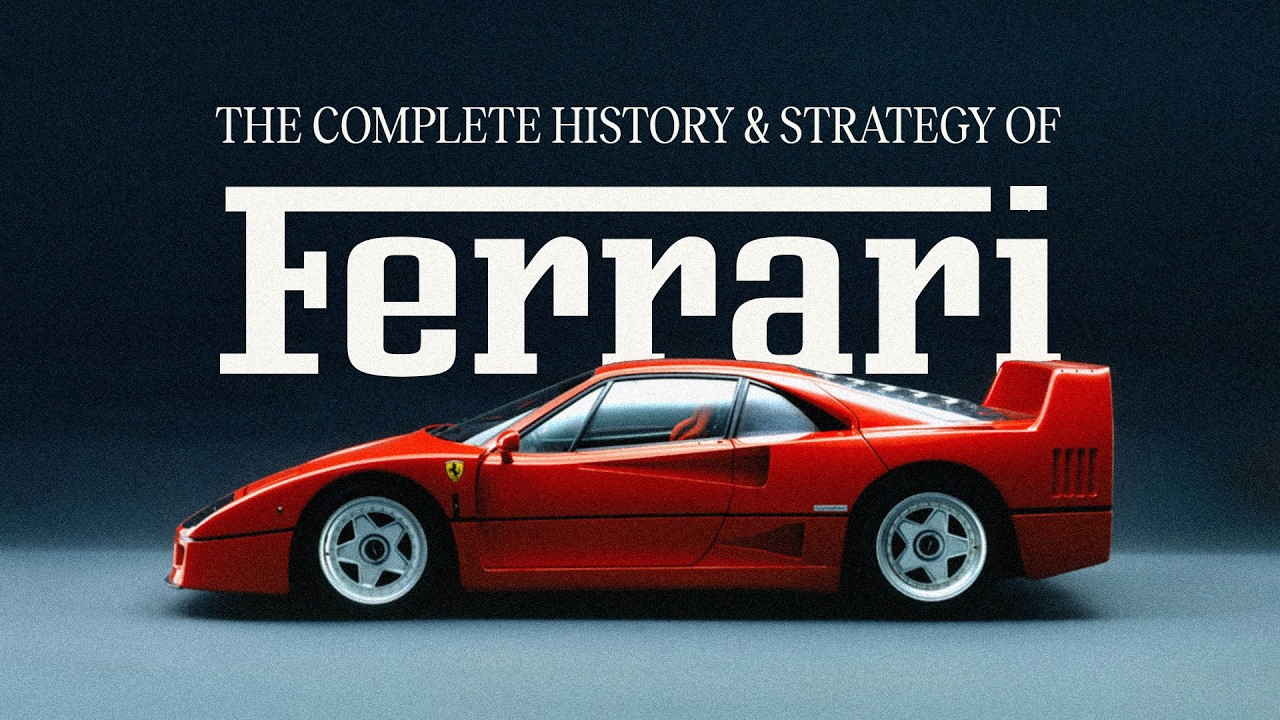
This Acquired episode unravels the paradoxical story of Ferrari, a company that uniquely blends ultra-luxury brand status with a core identity rooted in high-stakes motor racing. Ben Gilbert and David Rosenthal explore how Ferrari, despite selling a minuscule 14,000 cars annually (the number of Toyotas sold every 10 hours) and having only 180,000 global owners, boasts over a billion people recognizing its brand—the highest ratio of recognition to ownership in history. The hosts assert that Ferrari's business is not about transportation, but about "selling dreams" [01:46], achieving a higher market capitalization than industry giants like Ford, Volkswagen, and Mercedes-Benz, all while crafting cars mostly by hand in Marinello, Italy, and earmarking 80% for existing owners.
The narrative delves into the tumultuous life of founder Enzo Ferrari, from his early aspirations as a racer to his strategic pivot as an entrepreneur. Enzo, described as "Italy's Steve Jobs" and an "agitator of men" [28:40, 29:42], meticulously built the Ferrari myth. This included adopting the iconic prancing horse logo from a national war hero [25:56] and imbuing "Ferrari Red" (Rosso Corsa) with passion and desire [30:02]. The episode highlights how tragedy and death, rampant in early motor racing and touching Enzo's personal life (including the death of his son Dino), paradoxically fueled the brand's romantic allure, making Ferraris "beautiful death machines, beckoning to risk it all" [63:22].
A critical turning point was the infamous "Ford versus Ferrari" saga in the 1960s. The hosts reveal Enzo's tactical negotiation with Henry Ford II, ultimately blowing up the deal not out of pure intransigence, but as a calculated move to assert Ferrari's identity as an "Italian national treasure" and subtly signal his openness to a deal on his own terms [79:42]. This led to a 1969 agreement with Fiat's Giani Agnelli, selling 50% of Ferrari immediately and arranging for an additional 40% transfer upon Enzo's death, with 10% going to his illegitimate son, Pierro Ferrari, for $6.8 million (later $192 million for 90% in 1988).
The episode concludes with the "slow motion disaster" [105:17] that followed Enzo's death in 1988, as Fiat's strategy of increasing production (e.g., 7,000 Testarossas over 7 years versus Lamborghini's 2,000 Countaches over 16 years) diluted exclusivity and led to unsold cars. This precipitous decline set the stage for the dramatic return of Luca di Montezemolo in 1991 as Chairman, tasked with rekindling the "fire of the myth" [97:08] and transforming Ferrari into the powerhouse it is today.
👤 Who Should Listen
- Entrepreneurs and founders aiming to build iconic, high-value brands with enduring legacy.
- Marketing and brand strategists interested in how scarcity, myth-making, and emotional appeal drive luxury demand.
- Anyone fascinated by the history of the automotive industry, particularly the origins of luxury sports cars.
- Formula 1 fans seeking a deep dive into Ferrari's foundational story and its inextricable link to racing.
- Business leaders studying strategic partnerships, particularly the complexities of founder transitions and corporate acquisitions.
- Individuals interested in the intersection of personal tragedy, entrepreneurial drive, and brand identity.
🔑 Key Takeaways
- 1.Ferrari holds the "highest ratio of people who know about their products to people who actually own their products of any company in human history" with over a billion people recognizing the brand but only around 180,000 owners globally [02:29].
- 2.Enzo Ferrari, a "natural-born entrepreneur and marketer" [28:40], strategically leveraged national heroism (the prancing horse from Francesco Baracca) and emotional symbolism (Rosso Corsa, Ferrari Red) to build the brand's mystique [25:56, 30:02].
- 3.Ferrari's early business model was revolutionary, integrating a professional racing team, a world-class racing car constructor for both its team and private clients, and all necessary support infrastructure under one roof [48:05].
- 4.The constant presence of death and tragedy in early motor racing and Enzo Ferrari's personal life paradoxically amplified the brand's romantic allure, making Ferraris highly coveted "beautiful death machines" [63:22, 71:28].
- 5.Enzo's famous quote, "I sell engines and the car I throw in for free" [45:26], underscored his primary focus on raw performance over traditional luxury amenities in early road cars.
- 6.The "Ford versus Ferrari" saga was a calculated strategic move by Enzo, boosting Ferrari's image as an "Italian national treasure" and signaling his willingness to sell on his own terms, leading to the Fiat deal [79:42].
- 7.Luca di Montezemolo, hand-picked by Enzo, played a critical role in reviving Ferrari's Formula 1 success in 1975 after a 10-year drought and later returned as Chairman in 1991 to save the road car business from a period of declining exclusivity [95:06, 109:23].
- 8.Enzo's "one car less than the market demand" strategy [56:39] was abandoned by Fiat after his death, leading to increased production (e.g., 7,000 Testarossas vs. Lamborghini's 2,000 Countaches) and a dilution of exclusivity that nearly crippled the brand [107:22].
💡 Key Concepts Explained
Highest Ratio of Brand Recognition to Ownership
This concept describes Ferrari's unique market position where over a billion people recognize the brand, yet only about 180,000 people globally own a Ferrari. This extreme discrepancy contributes to the brand's immense mystique and desirability, making it a powerful example of luxury marketing [02:29].
One Car Less Than The Market Demand
Enzo Ferrari's core business strategy, this principle dictates intentionally producing slightly fewer cars than the perceived market demand. This controlled scarcity fuels exclusivity, maintains high desirability, and allows for premium pricing, becoming a cornerstone of ultra-luxury brand management [56:39].
Italian Luxury vs. French Luxury
The episode contrasts French luxury (e.g., Hermès), which emphasizes regal dreams, refined elegance, and quiet aspiration, with Italian luxury (e.g., Ferrari). Italian luxury prioritizes craftsmanship, passion, and intense emotional experience, often embodied by "beautiful death machines" and the centrality of designers' personalities [60:19].
Agitator of Men
Enzo Ferrari's self-description, highlighting his role not as an engineer or mechanic, but as a leader who inspired, directed, and motivated talented individuals to achieve his vision. This leadership style is compared to Steve Jobs, focusing on marketing and vision rather than technical creation [29:42].
⚡ Actionable Takeaways
- →Cultivate a distinctive brand identity by anchoring it to compelling stories, cultural symbols, or national heritage, as Enzo Ferrari did with the prancing horse logo [25:56].
- →Implement a scarcity strategy by intentionally producing slightly fewer units than market demand, thereby enhancing desirability and perceived value (the "one car less" approach) [56:39].
- →Embrace and even highlight non-traditional aspects or perceived "flaws" of your product if they contribute to its unique character and emotional appeal, rather than striving for generic perfection [41:58].
- →Integrate core, value-generating aspects of your business (e.g., racing and production) under a unified vision to create a compelling, heritage-rich proposition for customers [48:05].
- →Leverage high-profile challenges or rivalries as strategic marketing opportunities to reinforce your brand's narrative and exclusivity, as Ferrari did with Ford [79:42].
- →Ensure leadership, whether through a founder or successor, is deeply attuned to both the product's fundamental identity and the evolving market landscape, being willing to change culture when necessary, as Luca di Montezemolo did for F1 [95:06].
- →Resist the temptation to indiscriminately increase production to meet demand, as this can dilute brand exclusivity and value, as seen in Ferrari's struggles after Enzo's death [107:22].
⏱ Timeline Breakdown
💬 Notable Quotes
“"Ferrari has the highest ratio of people who know about their products to people who actually own their products of any company in human history."”
“"A company is perfect when the number of partners in it is odd and less than three."”
“"I feel alone after a life crowded by so many events and almost guilty of having survived."”
“"I sell engines and the car I throw in for free."”
“"Ferrari will always deliver one car less than the market demand."”
“"If for many years you do not win, it means that you do not add wood to the fire of the myth."”
Listen to Full Episode
📬 Get weekly summaries like this one
No spam. Unsubscribe anytime. By subscribing you agree to our Privacy Policy.
Continue Exploring